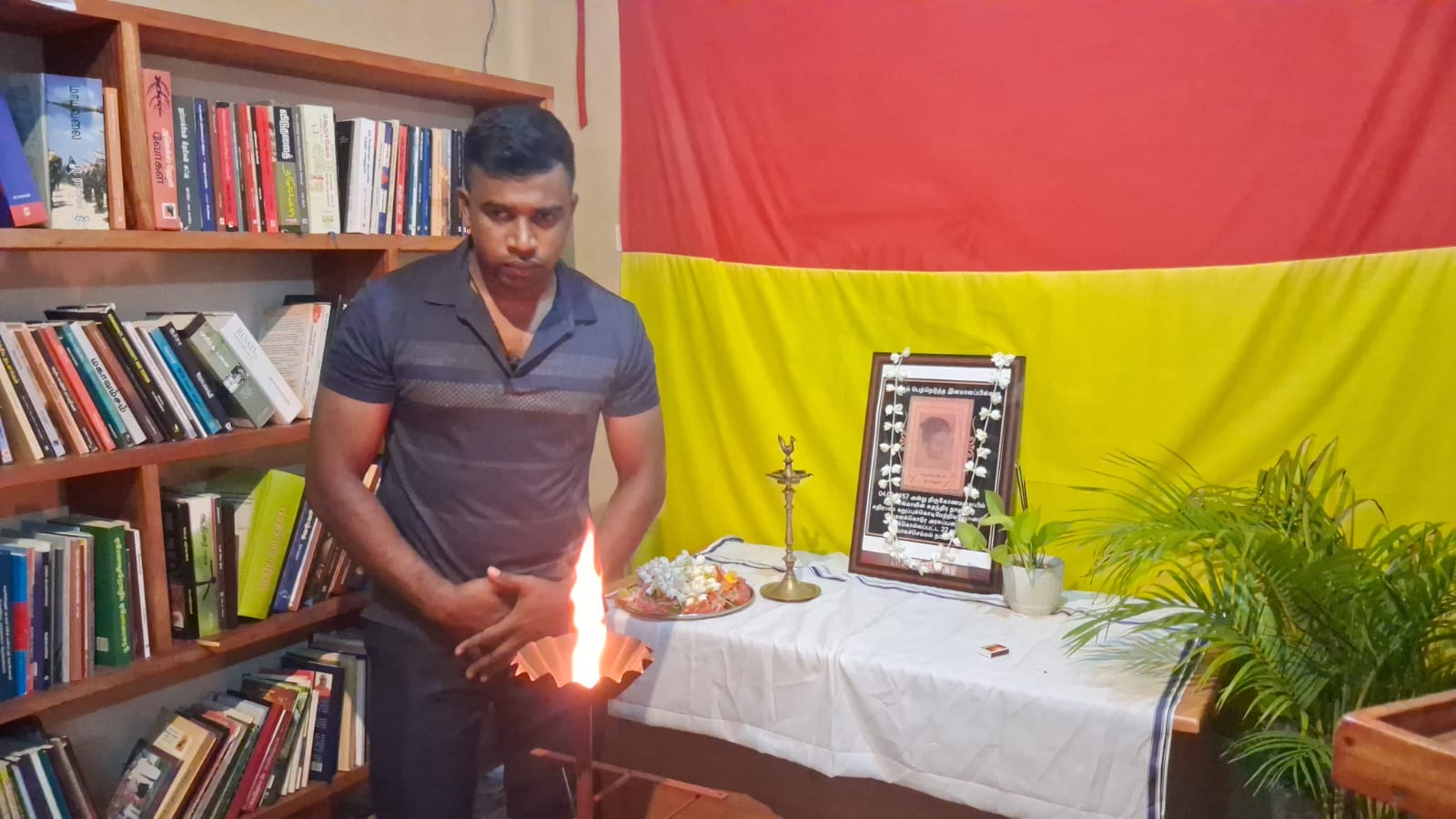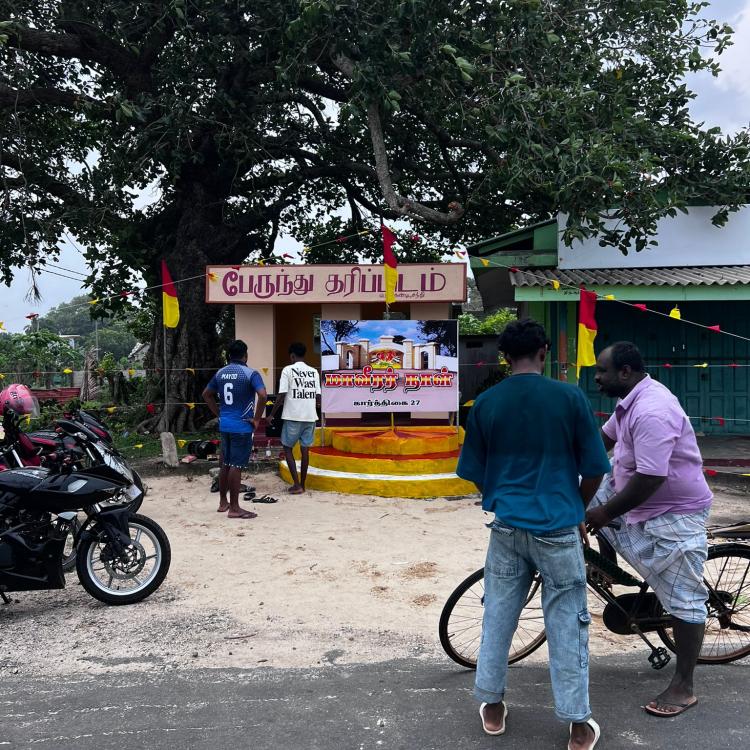
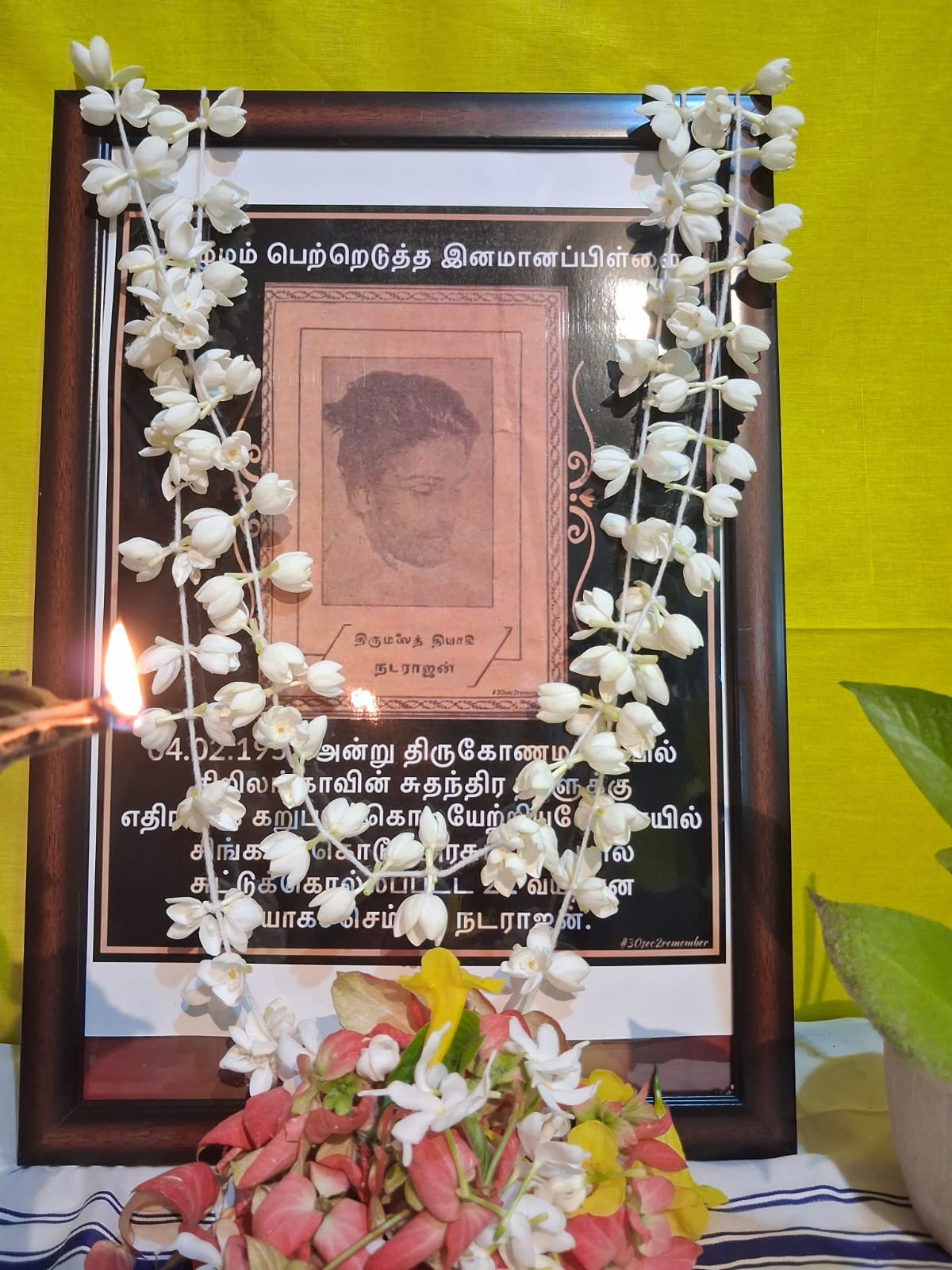
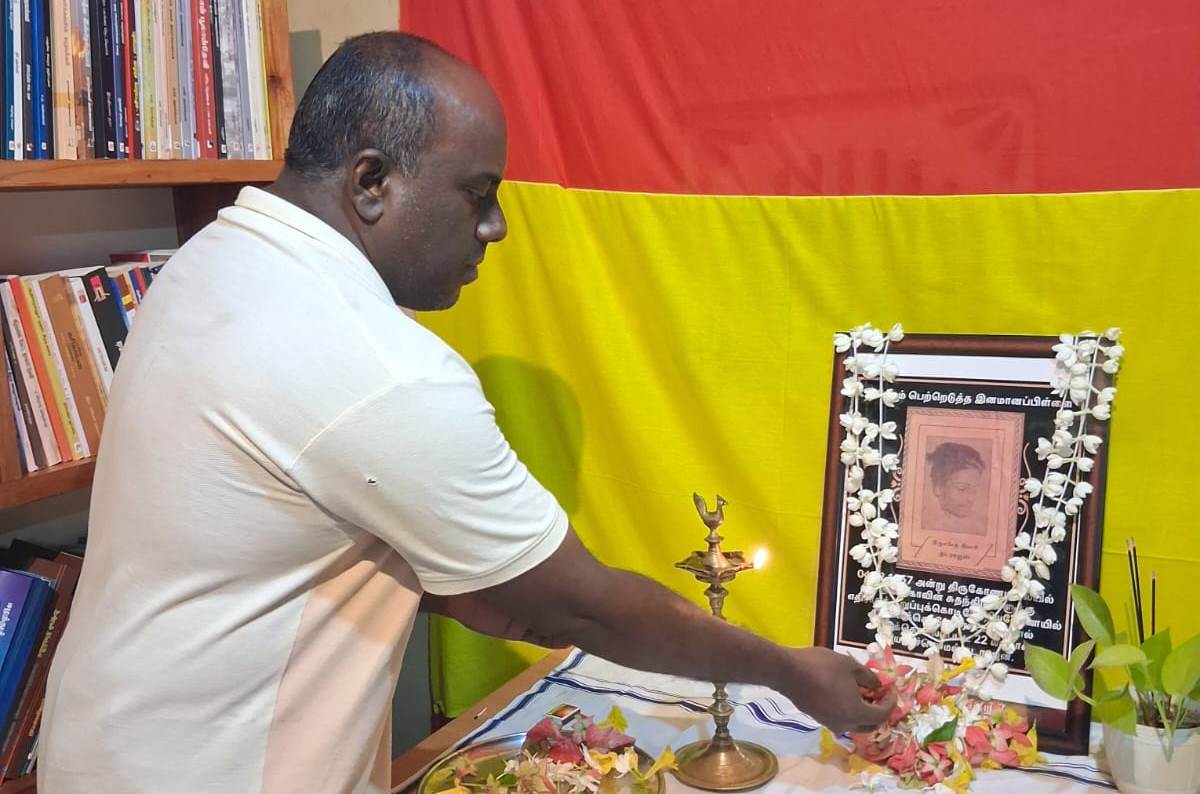
The 69th anniversary of the killing of Thirumalai Natarajan was commemorated on Wednesday, in Jaffna, with Tamils gathering to honour a young life cut short during one of the earliest protests against Sinhala majoritarian rule on Sri Lanka’s ‘Independence Day’.
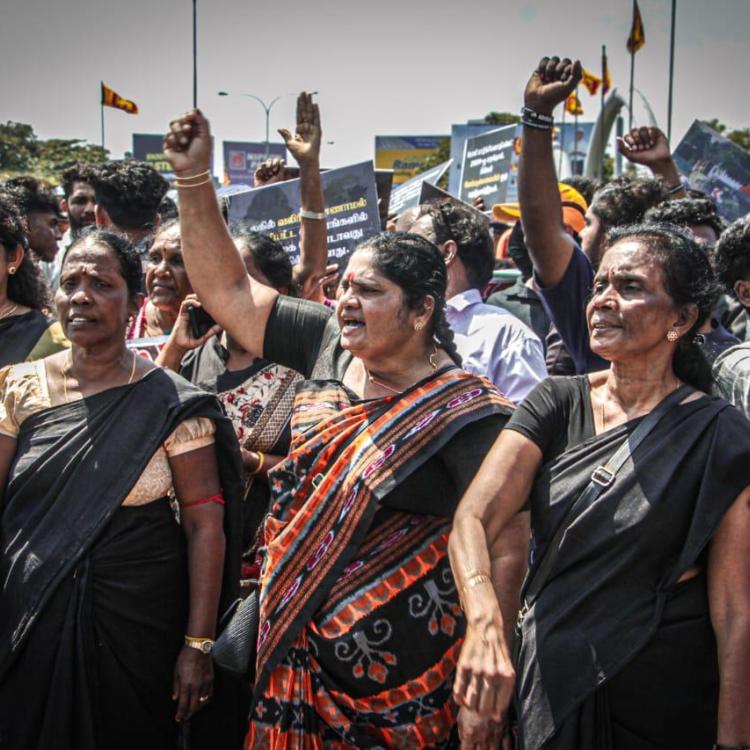
The commemoration marked events that took place on 4 February 1957, Sri Lanka’s ninth Independence Day, when Tamils across the island boycotted state celebrations and observed the day as a “Black Day”. The protest was held in opposition to the Sinhala Only Act, legislation that entrenched Sinhala as the sole official language and accelerated the political marginalisation of the Tamil nation.
In Trincomalee, thousands were marching with black flags. During the protest, Thirumalai Natarajan, just 22 years old, attempted to remove the Lion Flag that had been hoisted and replace it with a black flag as an act of resistance. He was shot dead at the scene, becoming one of the earliest Tamil martyrs killed for opposing the Sinhala-dominated state.
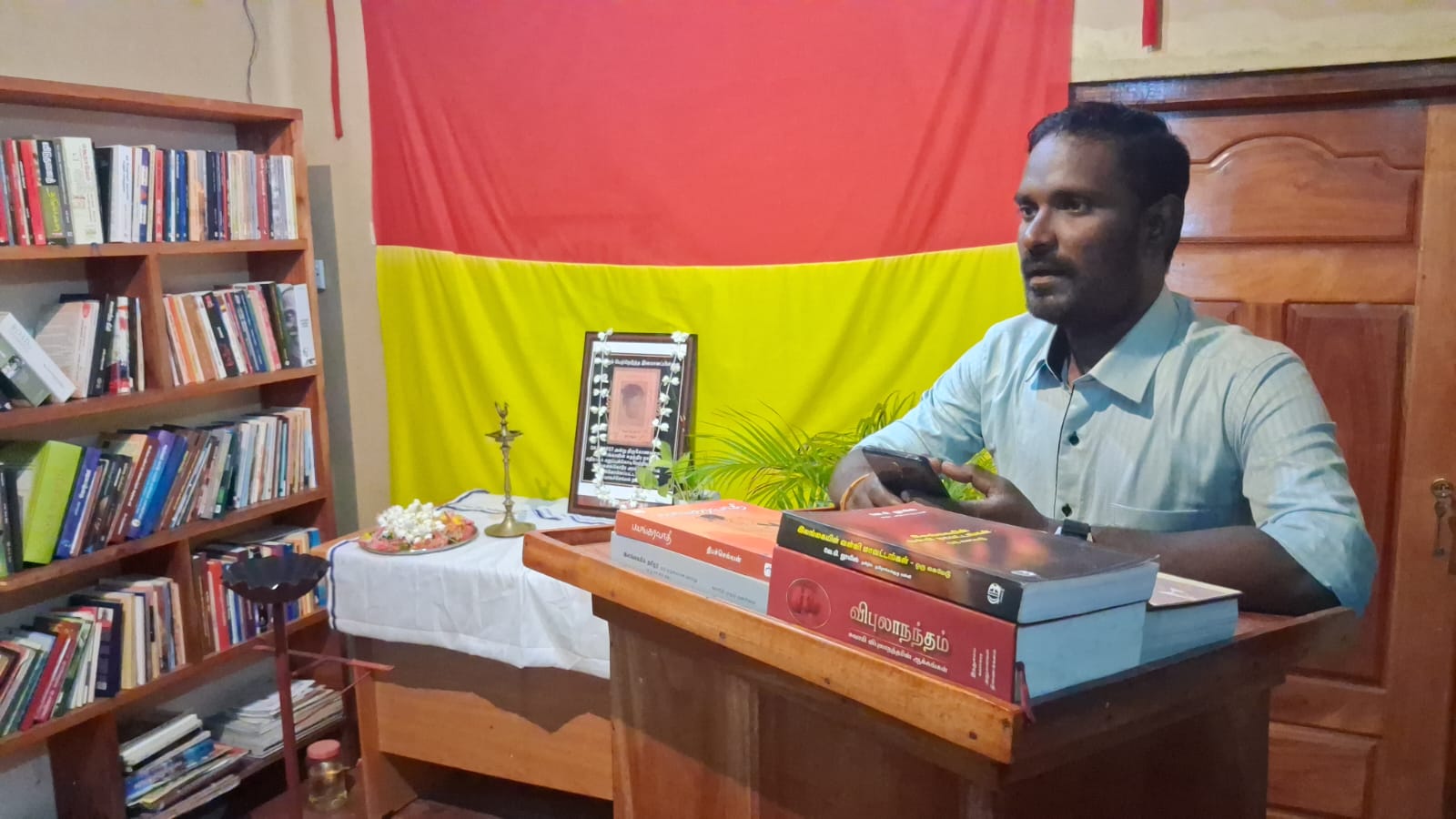
At yesterday’s commemoration addresses were delivered reflecting on his sacrifice and the broader struggle against state repression that Tamils have faced since independence.
Speakers recalled that Natarajan’s killing took place at a time when Tamils were already warning that the post-independence political order would deny them equality, dignity, and self-rule. His death has since come to symbolise the price paid by Tamils who resisted the imposition of Sinhala-Buddhist majoritarianism in the early years of the Sri Lankan state.