
The annual Mahotsavam of the historic Nainativu Nagapooshani Amman Temple concluded this week, its closing days drawing thousands of devotees to the island for the festival's major religious observances.
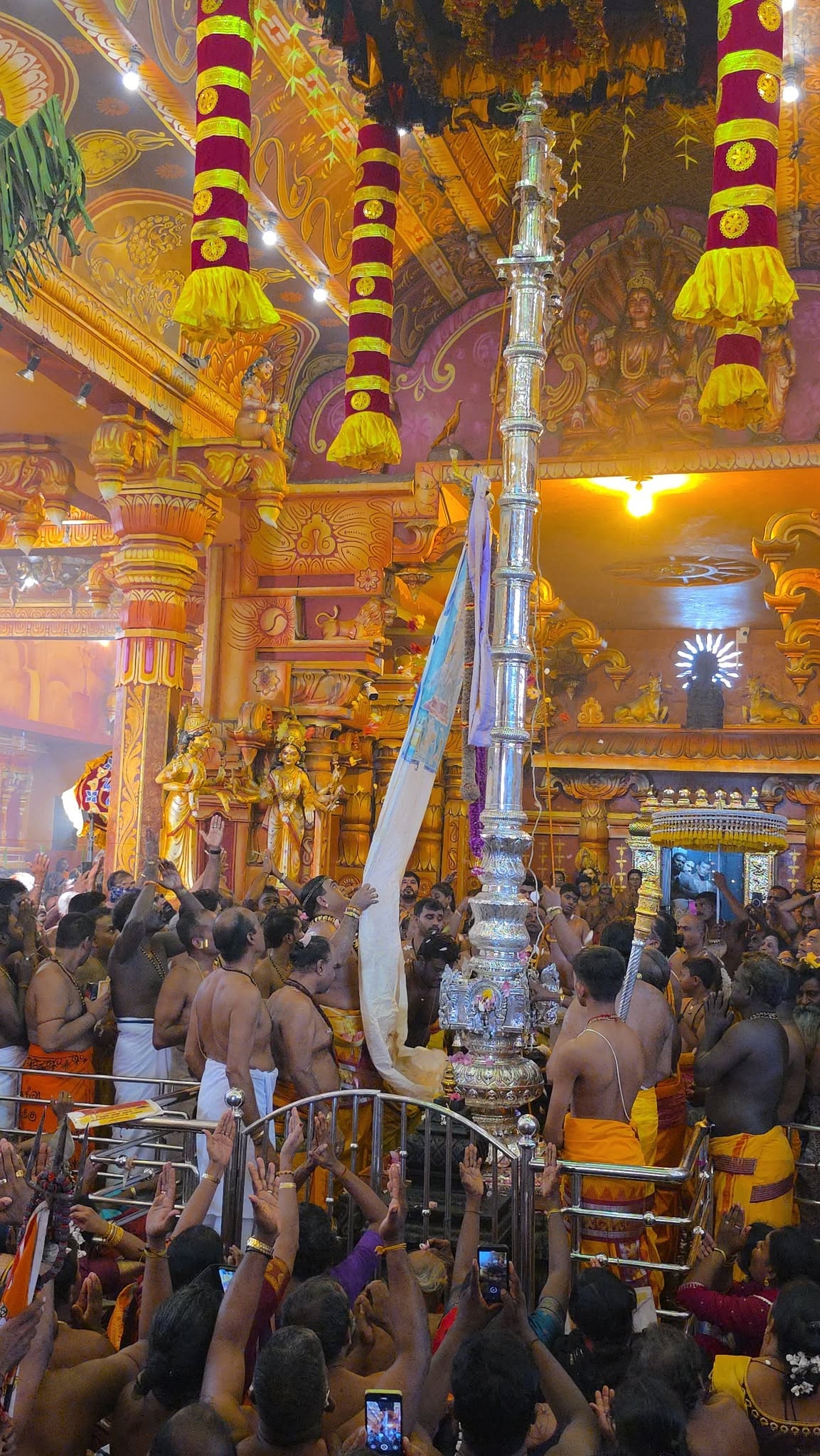
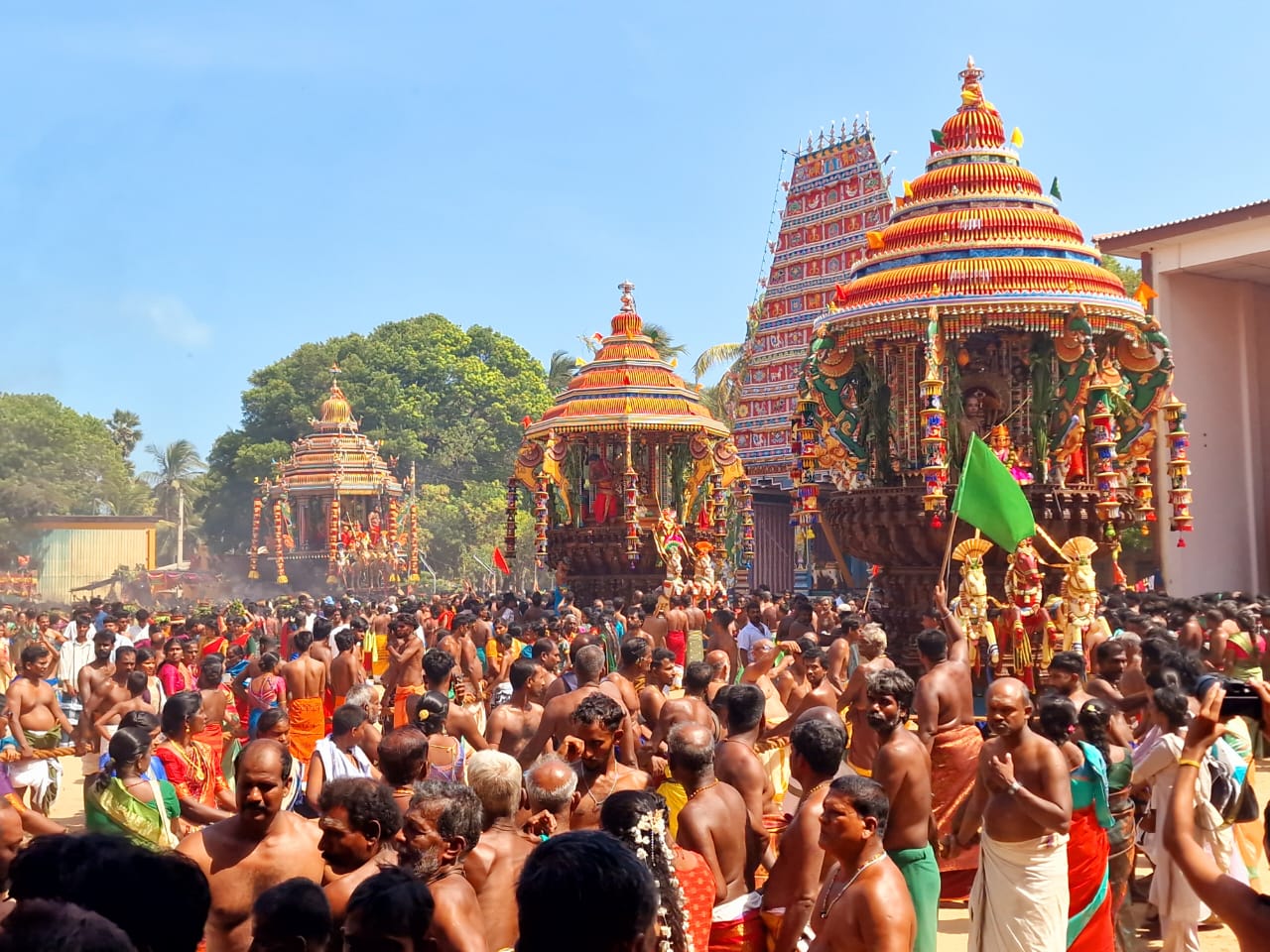
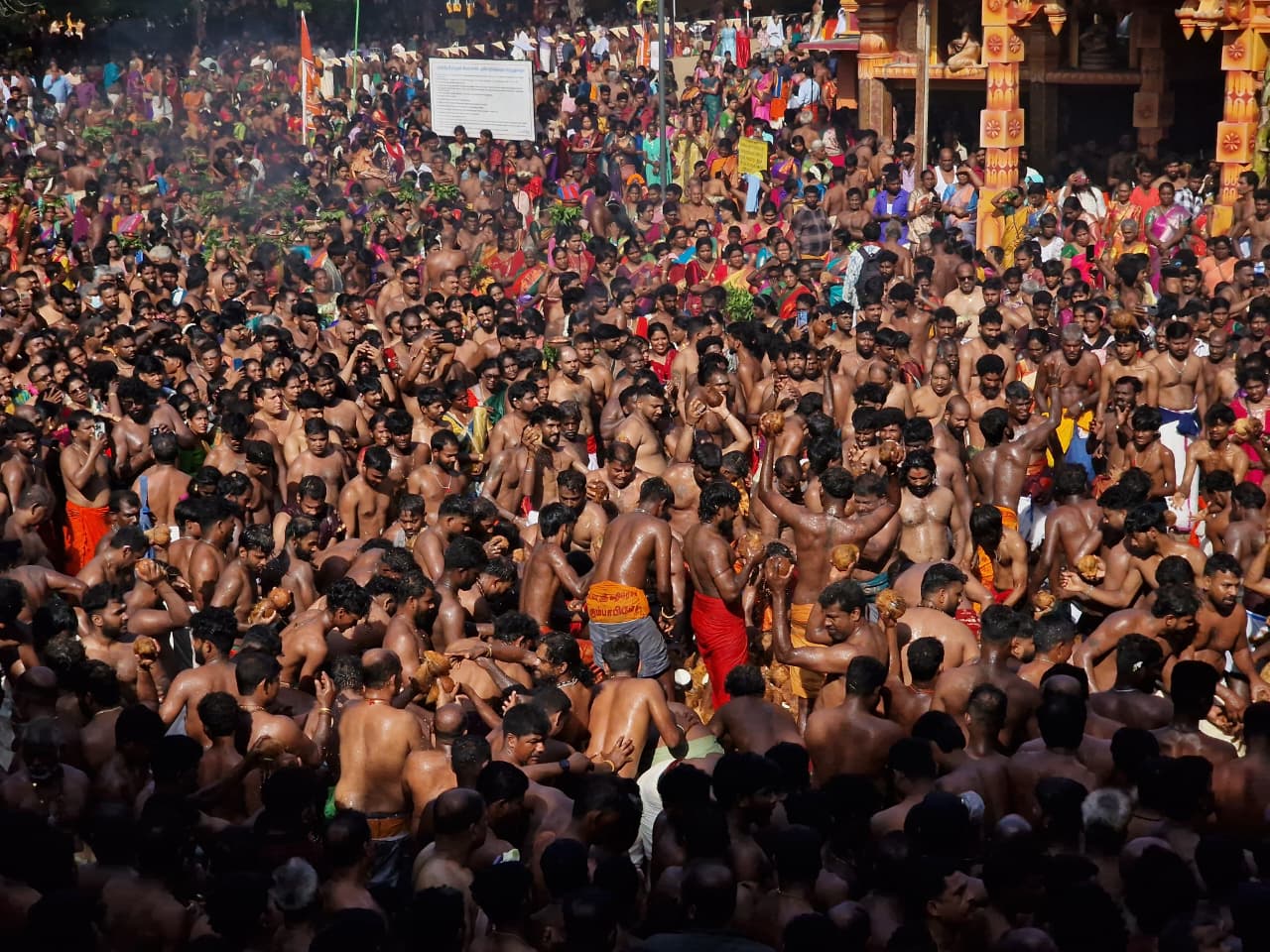
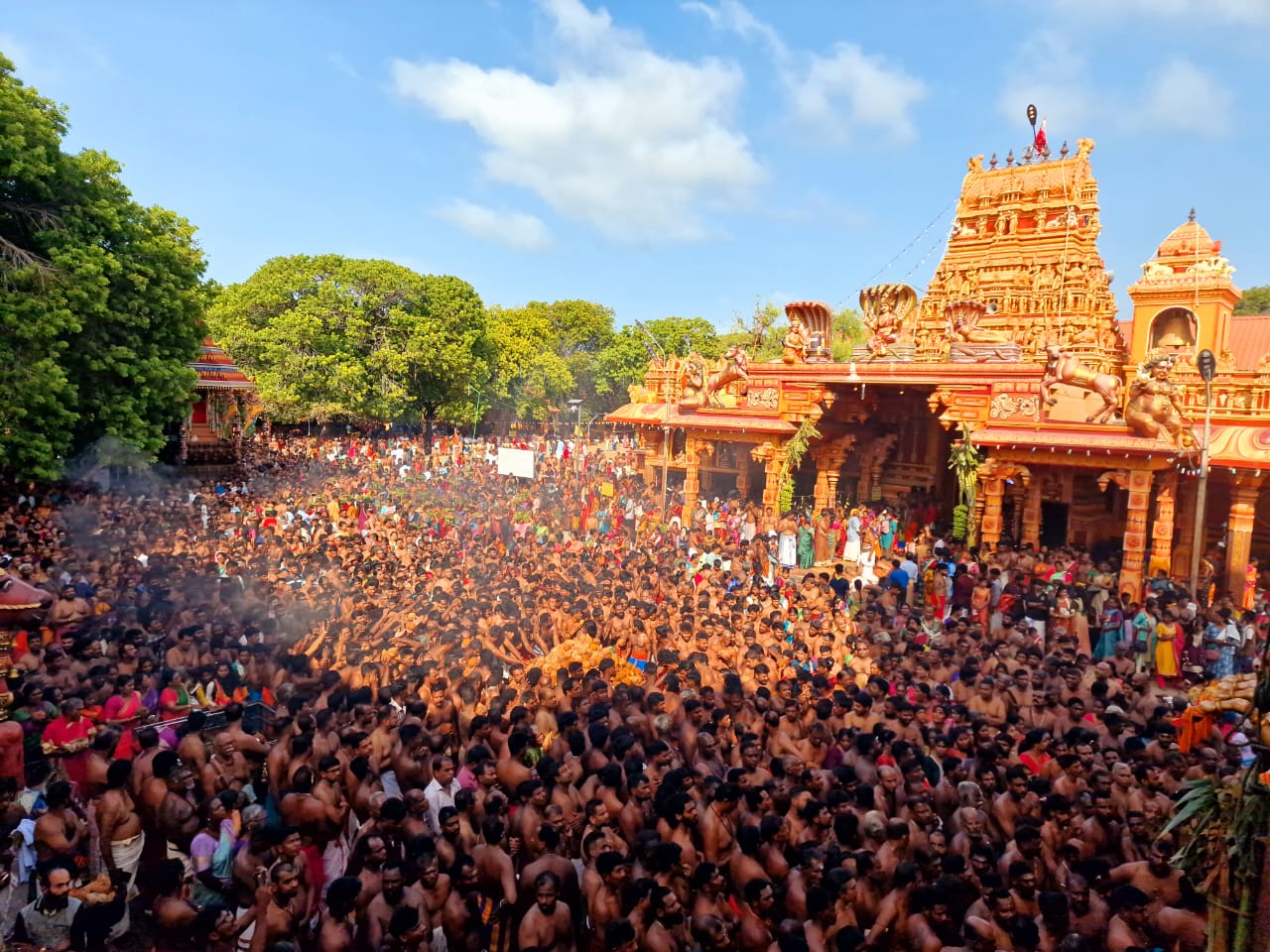
The festival began with the hoisting of the sacred temple flag, the Kodiyettram, on 15 June, opening a series of religious observances that ran over the following fortnight. The temple's chariot festival followed on Sunday, 28 June, when devotees gathered in large numbers for the celebrations.
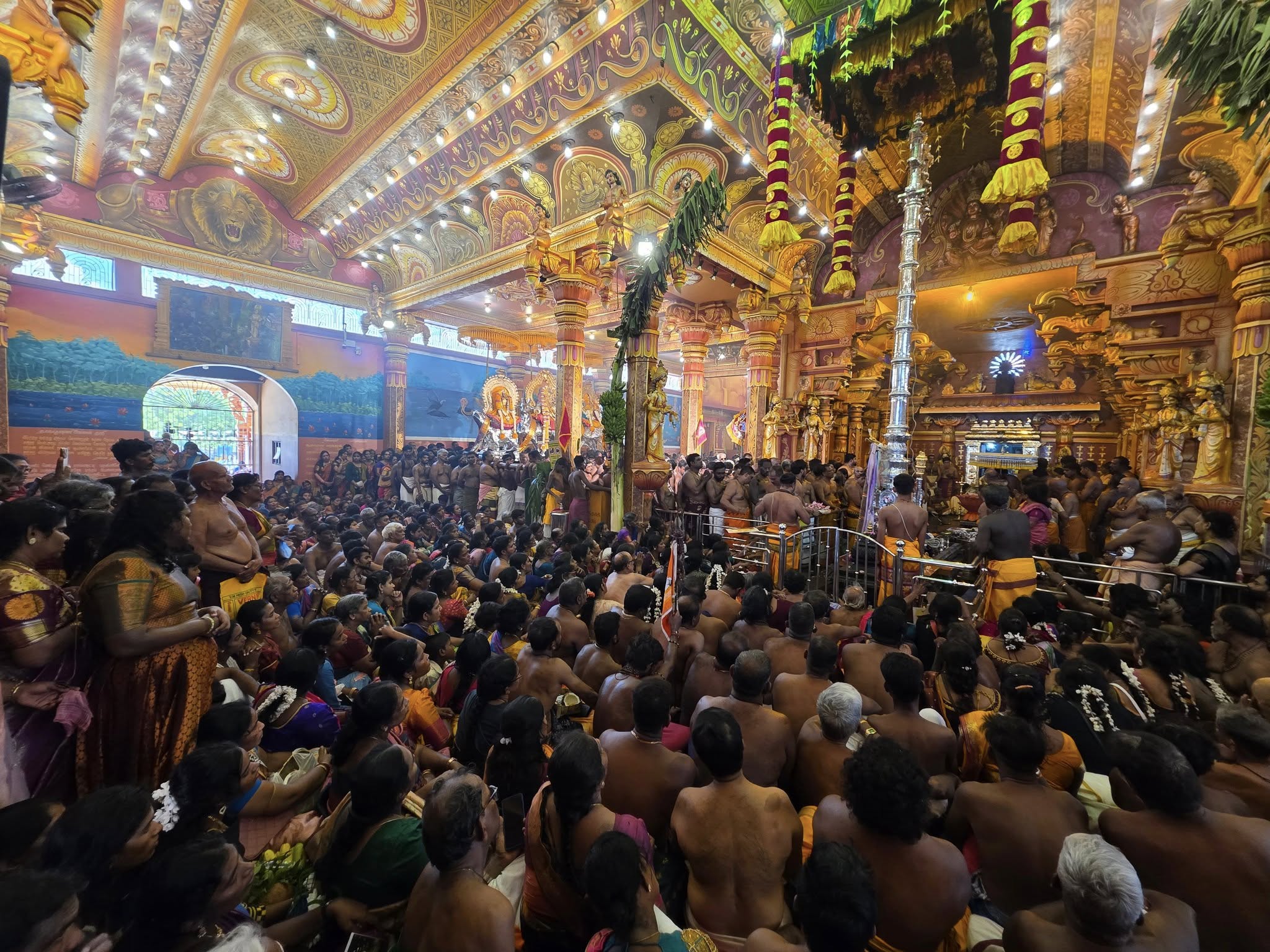
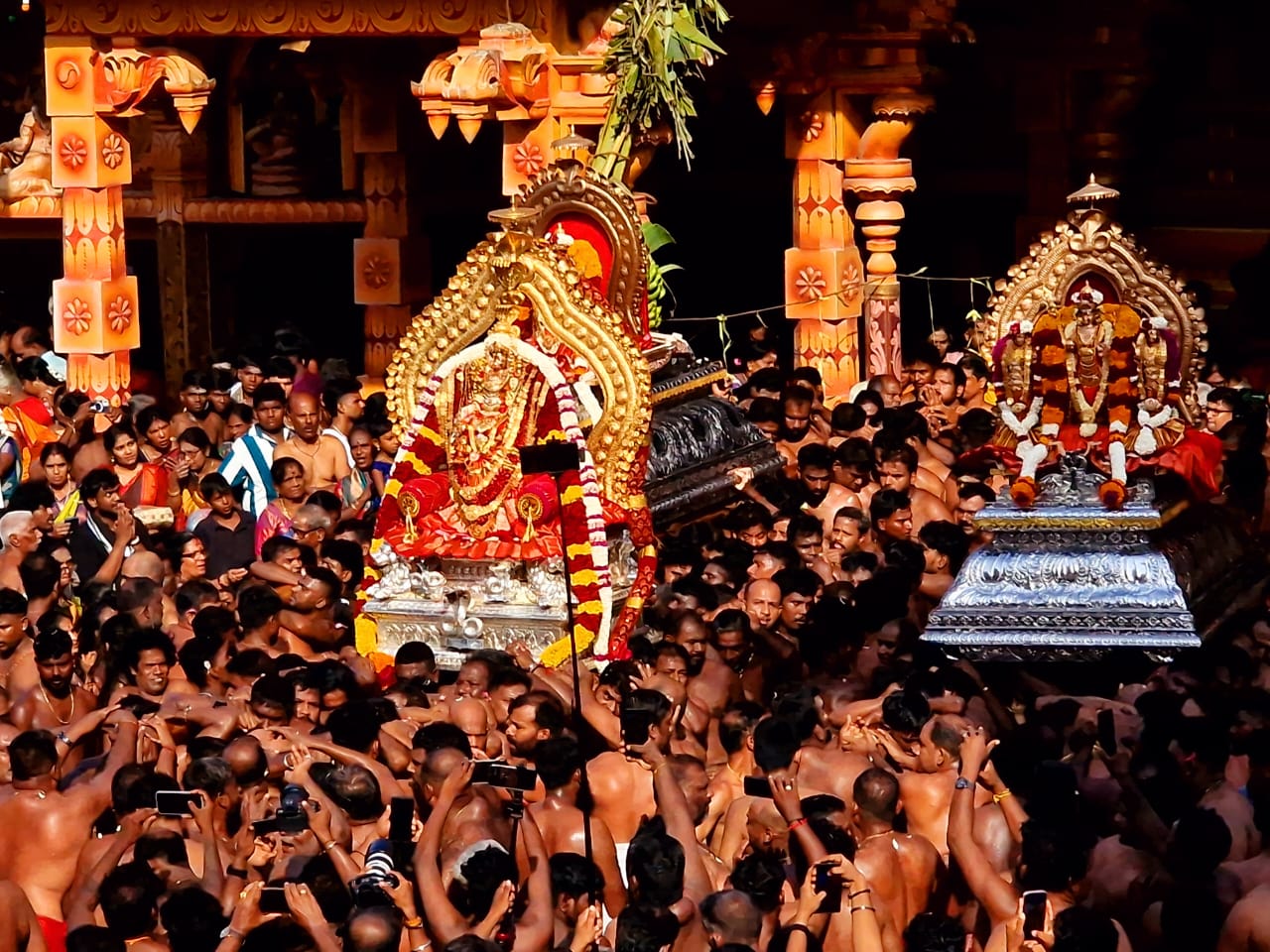
After special morning poojas, the Vasantha Mandapa pooja was conducted before Nagapooshani Amman, who, accompanied by Lord Pillaiyar and Lord Murugan, was taken in procession around the temple's inner court. At around 8.30am, the goddess was ceremonially mounted on her chariot and paraded before devotees, offering her blessings as she passed. Many fulfilled vows made to her during the procession, carrying kavadi, bearing fire pots and performing anga pradakshinam.
The Mahotsavam concluded on Monday morning with the Theertham festival, followed that evening by the ceremonial lowering of the temple flag.
The Isle of the Goddess, the Nagas and Tamil identity
The Nagapooshani Amman Temple stands among the most revered Hindu shrines in Eelam, woven deeply into the island's religious and cultural memory. For many devotees, it is a place where faith, history and identity converge.
In the Shaktham tradition, the shrine is counted among the Shakti Peethams, the sites sanctified by the falling of the goddess Shakti's dismembered body. One tradition holds that her waist fell here; another, found in the Tantra Chudamani, associates the site with her anklets, silambu, an object also central to the Tamil epic Silapathikaram. Local tradition holds that an earlier Shakti Peetham temple on the site was destroyed during the Portuguese invasion, in 1620, with the present sanctum continuing that sacred lineage; the current structure was built between 1720 and 1790.
The island appears repeatedly in ancient legend and literature. One tradition holds that Indra, seeking release from a curse, built the earliest shrine to the goddess here. Another tells of a serpent journeying from the neighbouring island of Puliyantheevu to offer flowers to the goddess, saved from the eagle Garuda by a merchant's intervention. In the Mahabharata tradition, Arjuna is said to have come to Naga Theevu, an older name for both Nainativu and the wider Jaffna peninsula meaning "island of the Nagas", to atone for killing Nagas, marrying a Naga princess and fathering a son, Papparavan, after whom the temple grounds are still traditionally known as Papparavan Thidal. The island is also named as Manipallavam in the Tamil epic Manimekalai, and appears too in Kundalakesi, testament to its place in Tamil literature since antiquity.
Together, these traditions cast Nainativu as a sacred island embedded deep in the literary and religious heritage of South Asia. Within the sanctum stands a striking five-headed Naga sculpture, regarded by some researchers as being of considerable antiquity; while its precise age remains a matter of scholarly study, it reinforces the temple's long association with serpent worship. Historians have long linked the island's ancient Naga people to the northern regions of Eelam, and many scholars believe serpent worship was their principal religious practice. The names Nagatheevu, Nainativu and Nagapooshani all preserve that connection, making the temple one of the clearest surviving expressions of the island's ancient Naga heritage.
Over the centuries, the shrine has endured repeated upheaval, the destruction and suppression of Hindu temples under colonial rule, and decades of armed conflict. Through each era it has remained a centre of worship and pilgrimage, making it one of the island's oldest continuously venerated Hindu sacred sites. More than stone and legend, the Nagapooshani Amman Temple represents the enduring continuity of Tamil Hindu civilisation in Eelam, a living testament to traditions that have survived conquest, colonialism and war.
Attempts to overshadow the Hindu presence
Nainativu today is home to two significant religious sites, the ancient Nagapooshani Amman Temple and the Nagadeepa Rajamaha Vihara, alongside the Nainativu Mohideen Jumma Mosque, believed to have been established during the colonial era by Muslim traders who frequented the island. For centuries, pilgrims of different faiths have shared this sacred landscape: Hindu devotees often pay their respects at the Buddhist temple, Buddhist pilgrims likewise visit the Amman temple, Muslim pilgrims continue their own traditions, and visitors commonly regard all three sites as part of Nainativu's shared religious heritage.
That coexistence, however, should not be confused with attempts to redefine the island's historical identity. The Nagadeepa Rajamaha Vihara is held by tradition to be a place the Buddha himself visited, a belief central to Sinhala Buddhist religious tradition, though many historians argue there is no historical evidence that any such visit took place.
Since the end of the armed conflict which culminated in the Mullivaikkal genocide of 2009, the Buddhist presence on Nainativu has expanded markedly. The recent installation of an 88-foot Buddha statue overlooking the island is perhaps the clearest symbol of that shift. Whatever religious significance is attached to the statue, its placement inevitably reshapes how the island is perceived by visitors. For many arriving by ferry, the towering Buddha is now the first landmark they see, recasting Nainativu in the popular imagination as primarily a Buddhist sacred space, despite its far older and more layered history.
The recent controversy over a proposed Nagapooshani Amman statue at Kurikattuvan Jetty, the main gateway for pilgrims travelling to Nainativu, illustrates the contradiction starkly.
The Velanai Pradeshiya Sabha approved, by majority vote, a proposal to install the statue at the newly renovated roundabout near the jetty. Councillors from the ruling National People's Power (NPP) opposed it, arguing that the site should instead carry symbols representing all religions, or a neutral monument reflecting the island's multi-ethnic character. The debate grew heated before the resolution passed regardless.
For many, the objection rang hollow. Weeks earlier, an 88-foot Buddha statue had been erected on Nainativu with no comparable call, from the same political quarters, for multi-faith symbolism or neutral representation. It is this apparent double standard, that has fuelled accusations of a selectively applied multiculturalism.
Across the North-East, disputes over Hindu sacred sites have repeatedly arisen in connection with state institutions, military occupation and competing heritage narratives. At Thirukoneswaram in Trincomalee, concerns have been raised over the continued military occupation of temple land and proposals for further state installations within the temple's historic precincts. Each case has its own context, but together they have fostered a perception among many Tamils that ancient Hindu sites are increasingly subject to state intervention that reshapes or diminishes their historical significance.
The people of Nainativu have themselves demonstrated, for generations, that coexistence is possible. It is the Sri Lankan state, not its pilgrims, that keeps turning a shared sacred space into contested ground.